
Chapter 1
Introduction to Flight Training
Introduction
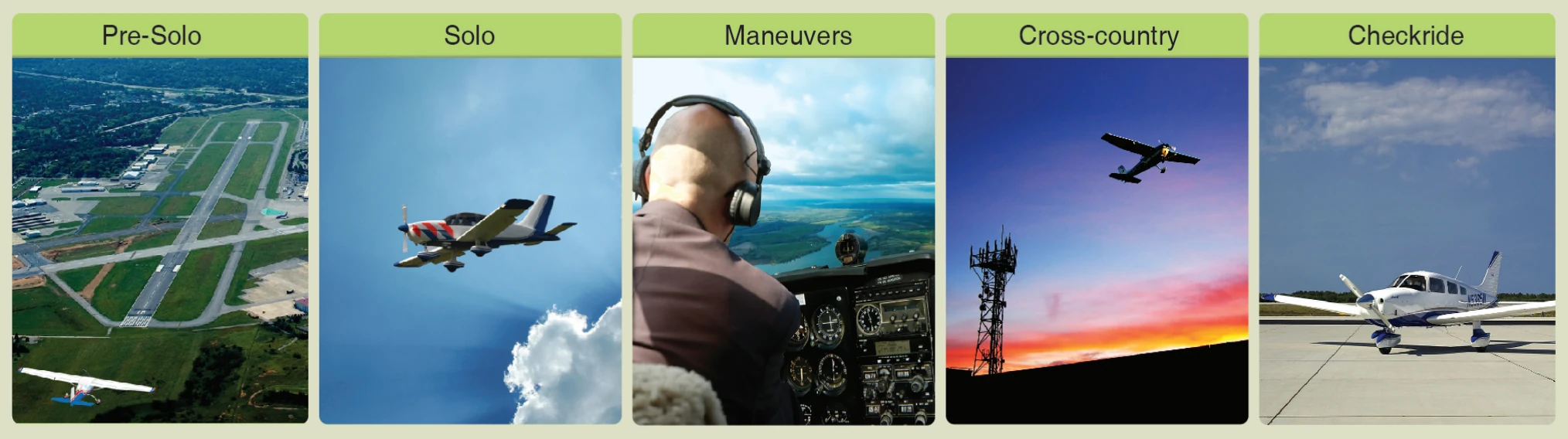
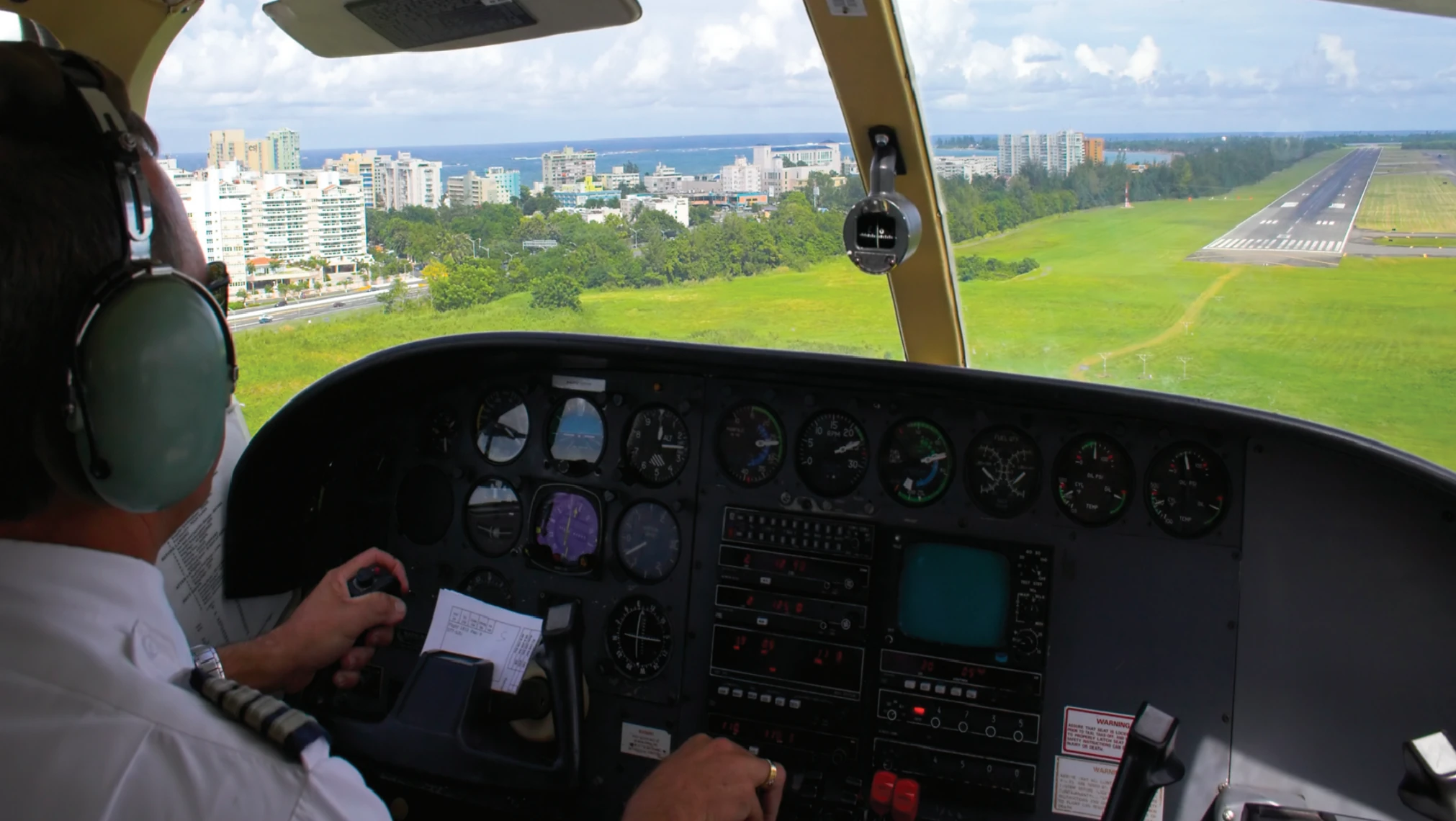
The overall purpose of primary and intermediate flight training, as outlined in this handbook, is the acquisition and honing of basic airmanship skills. [Figure 1-1] Airmanship is a broad term that includes a sound knowledge of and experience with the principles of flight; the knowledge, experience, and ability to operate an aircraft with competence and precision both on the ground and in the air; and the application of sound judgment that results in optimal operational safety and efficiency. [Figure 1-2] Learning to fly an aircraft has often been compared to learning to drive an automobile. This analogy is misleading. Since aircraft operate in a three- dimensional environment, they require a depth of knowledge and type of motor skill development that is more sensitive to this situation, such as:
- Coordination–the ability to use the hands and feet together subconsciously and in the proper relationship to produce desired results in the airplane.
- Timing–the application of muscular coordination at the proper instant to make flight, and all maneuvers, a constant, smooth process.
- Control touch–the ability to sense the action of the airplane and knowledge to determine its probable actions immediately regarding attitude and speed variations by sensing the varying pressures and resistance of the control surfaces transmitted through the flight controls.
- Speed sense–the ability to sense and react to reasonable variations of airspeed.
An accomplished pilot demonstrates the knowledge and ability to:
- Assess a situation quickly and accurately and determine the correct procedure to be followed under the existing circumstance.
- Predict the probable results of a given set of circumstances or of a proposed procedure.
- Exercise care and due regard for safety.
- Accurately gauge the performance of the aircraft.
- Recognize personal limitations and limitations of the aircraft and avoid exceeding them.
- Identify, assess, and mitigate risk on an ongoing basis.
The development of airmanship skills depends upon effort and dedication on the part of both the learner and the flight instructor, beginning with the very first training flight where proper habit formation begins with the learner being introduced to good operating practices.
Every airplane has its own particular flight characteristics. The purpose of primary and intermediate flight training, however, is not to learn how to fly a particular make and model airplane. The purpose of flight training is to develop the knowledge, experience, skills, and safe habits that establish a foundation and are transferable to any airplane. The pilot who has acquired necessary skills during training, and develops these skills by flying training-type airplanes with precision and safe flying habits, is able to easily transition to more complex and higher performance airplanes. Also note that the goal of flight training is a safe and competent pilot; passing required practical tests for pilot certification is only incidental to this goal.
Role of the FAA
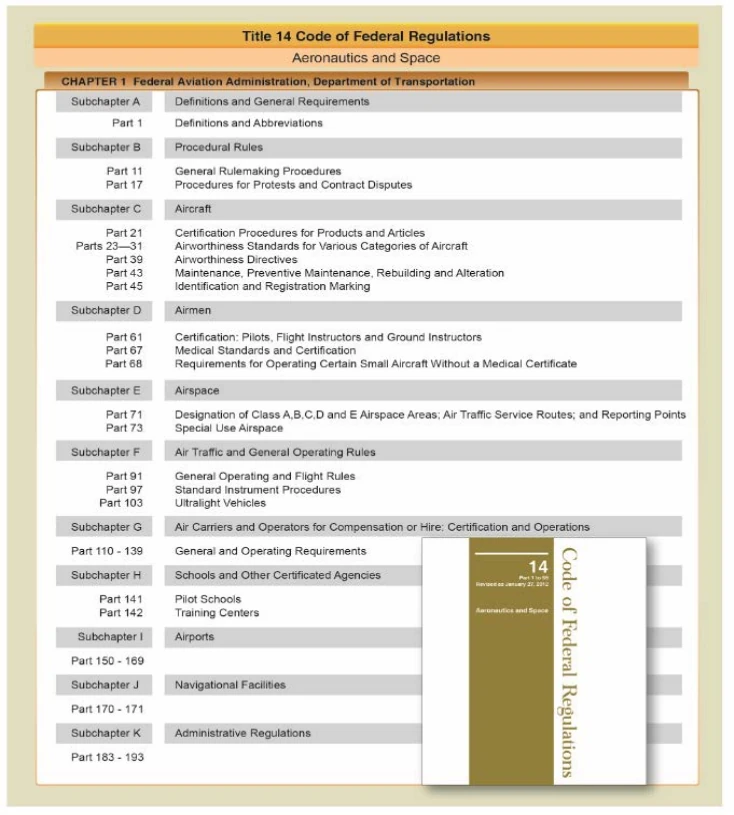
The Federal Aviation Administration (FAA) is empowered by the U.S. Congress to promote aviation safety by prescribing safety standards for civil aviation. Standards are established for the certification of airmen and aircraft, as well as outlining operating rules. This is accomplished through the Code of Federal Regulations (CFR), formerly referred to as Federal Aviation Regulations (FAR). Title 14 of the CFR (14 CFR) is titled Aeronautics and Space with Chapter 1 dedicated to the FAA. Subchapters are broken down by category with numbered parts detailing specific information. [Figure 1-3] For ease of reference and since the parts are numerical, the abbreviated pattern 14 CFR part ___ is used (e.g., 14 CFR part 91).
This guidance is not legally binding in its own right and will not be relied upon by the FAA as a separate basis for affirmative enforcement action or other administrative penalty. Conformity with the guidance is voluntary only and nonconformity will not affect rights and obligations under existing statutes and regulations.
While the various subchapters and parts of 14 CFR provide general to specific guidance regarding aviation operations within the U.S., the topic of aircraft certification and airworthiness is spread through several interconnected parts of 14 CFR.
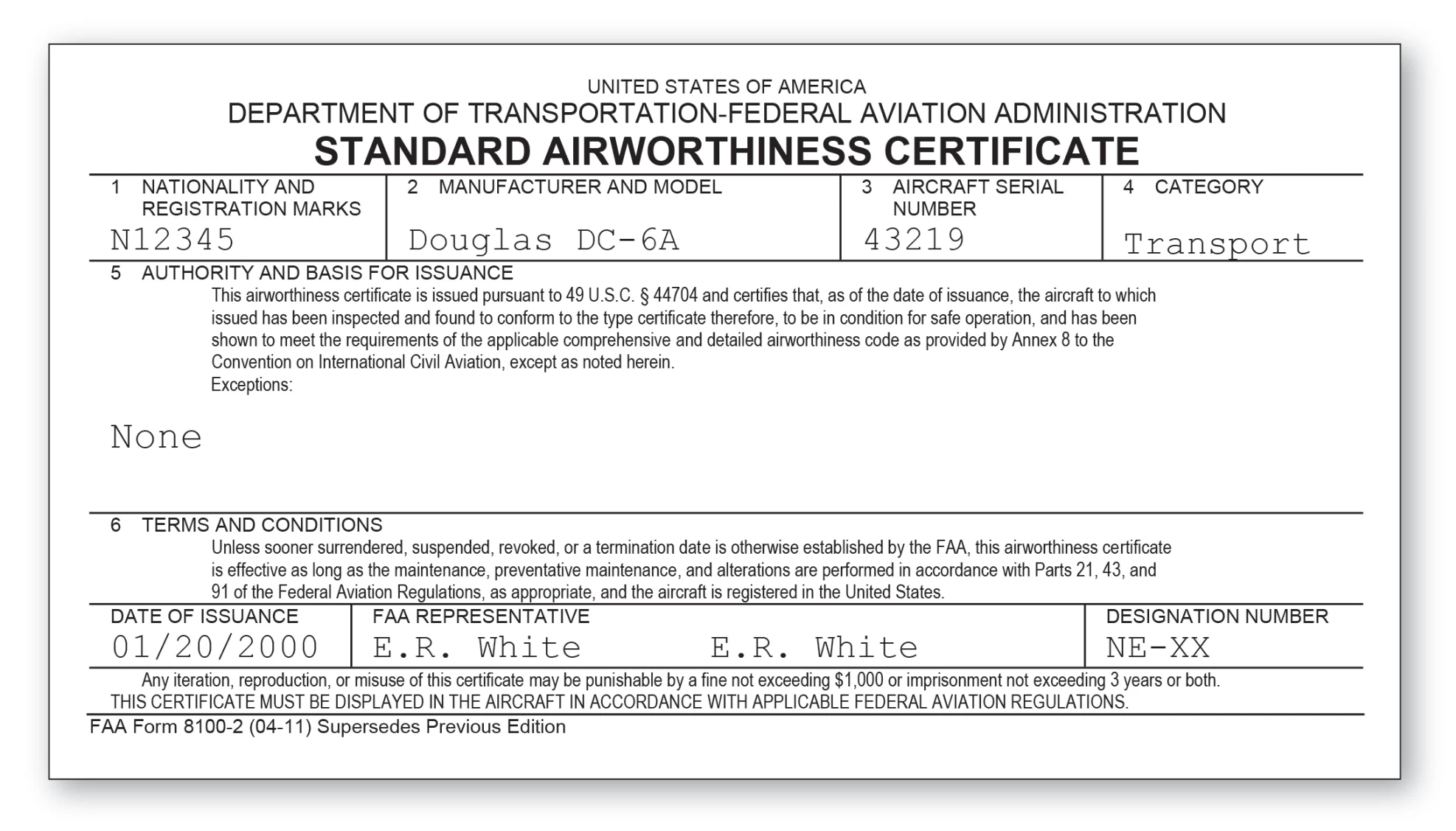
- 14 CFR part 21 prescribes procedural requirements for issuing airworthiness certificates and airworthiness approvals for aircraft and aircraft parts. A standard airworthiness certificate, FAA Form 8100-2 [Figure 1-4], is required to be displayed in the aircraft in accordance with 14 CFR part 91, section 91.203(b). It is issued for aircraft type certificated in the normal, utility, acrobatic, commuter or transport category, and for manned free balloons. A standard airworthiness certificate remains valid as long as the aircraft meets its approved type design, is in a condition for safe operation and maintenance, and preventative maintenance and alterations are performed in accordance with 14 CFR parts 21, 43, and 91.
- 14 CFR part 39 is the authority for the FAA to issue Airworthiness Directives (ADs) when an unsafe condition exists in a product, aircraft, or part, and the condition is likely to exist or develop in other products of the same type design.
- 14 CFR part 43 prescribes rules governing the maintenance, preventive maintenance, rebuilding, and alteration of any aircraft having a U.S. airworthiness certificate. It also applies to the airframe, aircraft engines, propellers, appliances, and component parts of such aircraft.
- 14 CFR part 45 identifies the requirements for the identification of aircraft, engines, propellers, certain replacement and modification parts, and the nationality and registration marking required on U.S.- registered aircraft.
- 14 CFR part 91 outlines aircraft certifications and equipment requirements for the operation of aircraft in U.S. airspace. It also prescribes rules governing maintenance, preventive maintenance, and alterations. Also found in 14 CFR part 91 is the requirement to maintain records of maintenance, preventive maintenance, and alterations, as well as records of the 100-hour, annual, progressive, and other required or approved inspections.
While 14 CFR part 91, section 91.205 outlines the minimum equipment required for flight, the Airplane Flight Manual/Pilot’s Operating Handbook (AFM/POH) lists the equipment required for the airplane to be airworthy. The equipment list found in the AFM/POH is developed during the airplane certification process. This list identifies those items that are required for airworthiness, optional equipment installed in addition to the required equipment, and any supplemental items or appliances.
Figure 1-5 shows an example of some of the required equipment, standard or supplemental (not required but commonly found in the aircraft) and optional equipment for an aircraft. The equipment list, originally issued by the manufacturer, is maintained by the Type Certificate Data Sheet (TCDS). An aircraft and its installed components and parts must conform to the original Type Certificate or approved altered conditions to meet the definition of airworthy in accordance with 14 CFR part 3.5.
Certification requirements for pilots, medical certificate requirements, and operating rules are found in the following parts:
- 14 CFR part 61 pertains to the certification of pilots, flight instructors, and ground instructors. It prescribes the eligibility, aeronautical knowledge, flight proficiency training, and testing requirements for each type of pilot certificate issued.
- 14 CFR part 67 prescribes the medical standards and certification procedures for issuing medical certificates for airmen and for remaining eligible for a medical certificate.
- 14 CFR part 68 contains requirements for operating certain small aircraft without a medical certificate.
- 14 CFR part 91 contains general operating and flight rules. The section is broad in scope and provides general guidance in the areas of general flight rules, visual flight rules (VFR), instrument flight rules (IFR), and as previously discussed aircraft maintenance, and preventive maintenance and alterations.