
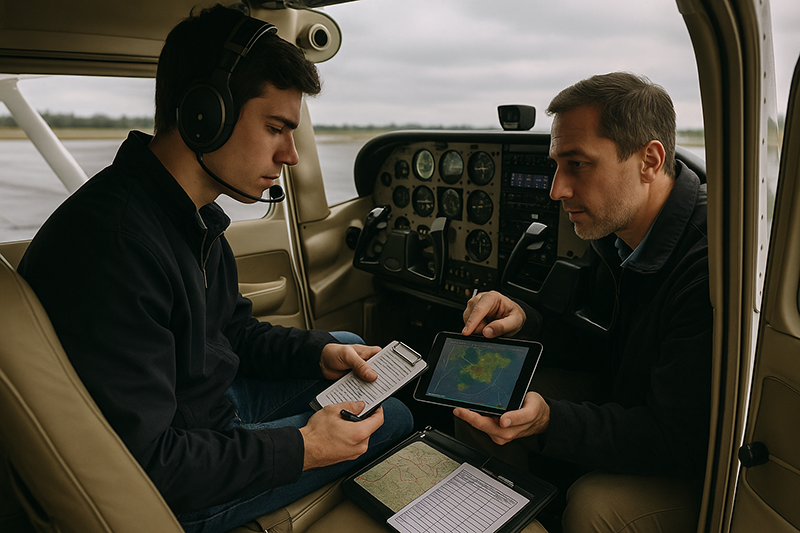
Hazardous attitudes in flying are not limited to reckless pilots, dramatic emergencies, or obvious lapses in judgment. They can appear quietly in everyday decisions: accepting a marginal weather forecast because the trip is important, skipping a more careful fuel review because the route is familiar, pressing a student to continue when fatigue is showing, or dismissing a small maintenance concern because the airplane flew fine yesterday.
For pilots, student pilots, flight instructors, aviation professionals, and serious aviation enthusiasts, the value of recognizing hazardous attitudes is practical and immediate. Aeronautical decision-making is not only about knowing regulations, aircraft systems, weather theory, and procedures. It is also about noticing the mental shortcuts that can distort risk perception before the airplane ever leaves the ramp. A pilot who can identify a hazardous attitude early has more time, more options, and a better chance of making a conservative, professional decision.
What Are Hazardous Attitudes in Aviation?
In aviation training, hazardous attitudes are patterns of thinking that can interfere with sound judgment. They do not automatically mean a pilot is unsafe or unprofessional. Most pilots will recognize some of these attitudes in themselves at one time or another. The safety issue is not that the thought appears. The issue is whether the pilot notices it, challenges it, and prevents it from driving the next decision.
The five classic hazardous attitudes commonly taught in aeronautical decision-making are anti-authority, impulsivity, invulnerability, macho, and resignation. Each one can affect a pilot differently, but all of them tend to narrow the pilot’s view of the situation. They can make a pilot minimize risk, rush a decision, reject good advice, or stop actively managing the flight.
Anti-authority is the tendency to resent rules, procedures, or outside input. In the cockpit, it can sound like, I know what I am doing, or that limitation is too conservative. Impulsivity is the urge to act quickly without fully thinking through the consequences. Invulnerability is the belief that accidents happen to other people, not to me. Macho thinking is not limited to showing off. It is any pressure to prove capability by accepting unnecessary risk. Resignation is the feeling that the outcome is no longer under the pilot’s control, even when useful actions are still available.
These attitudes matter because they often appear during normal operations, not just during emergencies. A pilot may be technically competent, current, and well trained, yet still be vulnerable to a poor decision if a hazardous attitude takes over during a busy moment.
Why This Matters in Real-World Aviation
Real-world flying rarely presents risk as a single obvious threat. More often, risk accumulates through small pressures and small compromises. The weather is not terrible, but it is lower than expected. The airplane is legal, but one system deserves a closer look. The passenger is anxious to arrive. The pilot is tired but not exhausted. The destination is familiar, so the flight feels routine. Individually, each factor may seem manageable. Together, they can set the stage for a decision that looks reasonable in the moment and questionable afterward.
Hazardous attitudes are important because they influence how pilots interpret those factors. Two pilots can look at the same conditions and reach different conclusions, not because one has better eyesight or more advanced equipment, but because one is more willing to question personal bias. A pilot affected by invulnerability may see marginal conditions as acceptable because previous flights worked out. A pilot affected by impulsivity may launch quickly to beat weather without taking time to examine alternatives. A pilot affected by resignation may continue into a deteriorating situation because changing the plan now feels too difficult.
Flight instructors see this in training as well. A student who consistently rushes checklists may not be intentionally careless. The student may be responding to perceived pressure to keep the lesson moving. A certificated pilot who resists using a written procedure may not dislike safety. The pilot may have developed overconfidence from repetition. A professional aviator may recognize hazardous attitudes in crew resource management, especially when authority gradients, schedule pressure, or fatigue affect communication.
Recognizing hazardous attitudes is therefore not a personality exercise. It is a flight safety skill. It belongs in preflight planning, briefing, cockpit workflow, weather decisions, training debriefs, and post-flight reflection.
How Pilots Should Understand This Topic
A useful way to understand hazardous attitudes is to treat them as cockpit warning lights for judgment. A warning light does not mean the engine has failed, but it does mean the pilot should investigate before the situation worsens. In the same way, noticing a thought such as I have done this before or I do not want to disappoint my passengers should prompt a pause. The pause gives the pilot a chance to separate pressure from performance.
Hazardous attitudes are often connected to legitimate goals. A pilot wants to complete the trip, meet a schedule, demonstrate competence, control costs, or avoid inconvenience. Those goals are understandable. The problem begins when the goal becomes more important than the conditions of the flight. Safe decision-making requires the pilot to keep the aircraft, environment, pilot condition, and available options in the center of the decision.
Many pilots benefit from naming the attitude out loud or in writing. For example, before departing on a cross-country flight, a pilot might ask: Am I trying to prove something? Am I ignoring a rule, procedure, limitation, or recommendation because it is inconvenient? Am I rushing? Am I assuming it cannot happen to me? Am I giving up on better options too early? These questions are simple, but they shift the pilot from reacting to evaluating.
The goal is not to become overly cautious to the point of paralysis. Aviation always involves managing risk, not eliminating it completely. The professional standard is to recognize risk honestly, make decisions based on the actual situation, and remain willing to change the plan when the facts change.
The Five Hazardous Attitudes in Everyday Flying
Each hazardous attitude has a recognizable cockpit signature. The more familiar pilots become with these signatures, the easier it is to catch them before they influence aircraft control, navigation, communication, or go/no-go decisions.
Anti-Authority
Anti-authority appears when a pilot dismisses rules, procedures, checklists, air traffic control instructions, instructor guidance, or operating limitations without a sound basis. It does not always look defiant. Sometimes it appears as quiet rationalization: the checklist is too slow, the procedure is for less experienced pilots, or the limitation is probably conservative.
In everyday flying, anti-authority can show up when a pilot ignores a personal minimum, treats a standard operating procedure as optional, or resists input from another pilot because accepting it feels like losing control. A healthier response is to remember that procedures are often built from accumulated experience. If a pilot has a reason to deviate from a procedure, that reason should be operationally sound, legal, and defensible, not merely convenient.
Impulsivity
Impulsivity is the urge to do something immediately. In aviation, quick action is sometimes necessary, especially in time-critical abnormal or emergency situations. The hazard is acting without confirming the problem, considering consequences, or using available resources.
Impulsivity can appear during takeoff briefings, radio communications, weather deviations, runway changes, traffic conflicts, or unexpected system indications. A pilot might switch frequencies too quickly, accept a clearance without fully understanding it, rush a checklist item, or turn toward an opening in the weather without considering terrain, airspace, fuel, and exit options. The corrective habit is not to become slow. It is to become deliberate. Even a brief pause can improve the quality of the next action.
Invulnerability
Invulnerability is the belief that a bad outcome is unlikely because the pilot has succeeded before. It can be strengthened by experience, especially when previous marginal decisions did not lead to visible consequences. A pilot who repeatedly lands with less fuel margin than planned may begin to see that practice as normal. A pilot who has flown through deteriorating weather without difficulty may become less sensitive to changing conditions.
This attitude is dangerous because aviation experience can teach the wrong lesson if the pilot only counts successful outcomes. A flight can be completed safely despite poor decision-making. That does not make the decision sound. Recognizing invulnerability requires pilots to evaluate the decision process, not just the result.
Macho
Macho thinking is often misunderstood as showing off, but it can be more subtle. It may appear as pressure to prove that a pilot can handle strong crosswinds, low ceilings, complex airspace, a challenging aircraft, or a demanding schedule. It can also appear when an instructor or experienced pilot feels compelled to demonstrate confidence even when caution would be more professional.
The antidote is to separate competence from risk acceptance. Skilled pilots do not prove ability by reducing margins unnecessarily. They prove ability by making disciplined decisions, using all available information, and saying no when the situation calls for it.
Resignation
Resignation occurs when a pilot feels that nothing can be done. It may appear during high workload, confusion, equipment problems, weather deterioration, or instructional stress. The pilot may stop looking for options, stop communicating clearly, or continue on the current path because changing the plan feels overwhelming.
In many situations, useful options still exist: slow down, climb or descend if appropriate and safe, ask air traffic control for assistance, divert, hold, transfer aircraft control, use a checklist, request vectors, or land at a suitable airport. The key is to re-engage. A pilot does not need the perfect solution immediately. The pilot needs the next safe action.
Common Mistakes or Misunderstandings
One common mistake is assuming hazardous attitudes belong only to careless pilots. In reality, they can affect conscientious pilots precisely because aviation creates pressure. A well-prepared student may become impulsive during a checkride because the desire to perform is strong. A conservative private pilot may become vulnerable to get-there pressure because passengers are waiting. A professional pilot may hesitate to challenge a decision because crew dynamics feel uncomfortable.
Another misunderstanding is treating the five hazardous attitudes as labels for people. That is not helpful. A pilot is not an anti-authority pilot or a resignation pilot as a permanent identity. A pilot may experience anti-authority thinking in one situation and impulsivity in another. Labeling people tends to create defensiveness. Naming the attitude creates awareness.
Pilots also sometimes confuse legality with sound decision-making. A flight may meet minimum legal requirements and still be unwise for that pilot, that aircraft, that route, or that day. Personal minimums, training experience, proficiency, equipment status, weather trends, terrain, runway environment, and fatigue all matter. Hazardous attitudes often push pilots toward asking, Can I legally do this? A safer question is, Should I do this under these conditions?
A fourth mistake is waiting until the cockpit is busy to manage attitude. By the time a pilot is low, fast, task-saturated, and unsure, self-assessment becomes harder. The best time to identify risk-producing thinking is before the flight, during the briefing, and at planned decision points. Good pilots build pauses into the operation before pressure rises.
Finally, pilots may believe that confidence and humility are opposites. They are not. A confident pilot can still ask for help, delay a departure, use a checklist, request clarification, or discontinue an approach. In fact, those actions often reflect confidence in the right priorities.
Practical Example: A Familiar Trip With Subtle Pressure
Consider a private pilot planning a short cross-country flight to bring family members home after a weekend visit. The route is familiar, the airplane is one the pilot flies regularly, and the forecast appears workable. During the afternoon, the ceiling begins trending lower near the destination. Surface winds are still acceptable, and visibility is not alarming, but the weather picture is less comfortable than it looked that morning.
The pilot notices several thoughts. The trip is short. The family wants to get home tonight. The airplane is already fueled. The destination has been reached many times before. Another pilot on the field recently departed in the same general direction. None of these facts, by themselves, are a flight hazard. But they can encourage a hazardous attitude.
Invulnerability may appear as, this route has never been a problem for me. Impulsivity may appear as, let us go now before it gets worse. Macho thinking may appear as, a competent pilot should be able to handle this. Anti-authority may appear if the pilot starts treating personal minimums as suggestions because they are inconvenient. Resignation may appear later if the flight launches and conditions deteriorate: we are already committed, so we might as well continue.
A disciplined pilot interrupts that chain before departure. The pilot reviews weather trends, available alternates, fuel planning, terrain, daylight, proficiency, and passenger considerations. The pilot may decide to delay, drive, file an appropriate flight plan if qualified and current, choose a different destination, or brief a clear turnaround point. The key is not that every marginal condition requires cancellation. The key is that the decision is based on current information and honest risk assessment, not on pressure disguised as confidence.
Best Practices for Pilots
Recognizing hazardous attitudes becomes easier when pilots make self-assessment part of normal cockpit discipline. This should not feel like a separate academic exercise. It should be woven into preflight planning, takeoff briefings, en route decision points, approach briefings, and training debriefs.
Start with personal minimums that are realistic, written, and periodically reviewed. Personal minimums are not a substitute for regulations or aircraft limitations. They are an additional decision-making tool that accounts for pilot proficiency, experience, mission demands, and operating environment. If a pilot repeatedly changes personal minimums at the moment they become inconvenient, that is a warning sign.
Use briefings to expose hidden pressure. A simple passenger briefing can include expectations about weather delays, diversions, and the possibility of canceling. When passengers understand before departure that safety decisions may change the schedule, the pilot reduces social pressure later. In instructional flying, instructors can do the same by discussing decision points before the lesson begins.
Build a habit of verbalizing uncertainty. Saying, I am not comfortable with this trend, or I need a minute to sort this out, can be powerful. It gives the pilot permission to slow down and gives others in the cockpit an opportunity to contribute. In crew environments, this supports better communication. In single-pilot operations, speaking the concern aloud can still improve awareness.
Pilots can also use short mental triggers. If the thought includes words such as just, probably, only, no big deal, or I have done it before, pause and examine the assumption. Those words do not always indicate poor judgment, but they often appear when a pilot is trying to reduce discomfort rather than evaluate risk.
Helpful habits include:
- Reviewing the plan at predetermined decision points instead of waiting for discomfort to peak.
- Asking what has changed since the original plan was made.
- Considering what advice you would give another pilot in the same situation.
- Inviting input from instructors, other pilots, dispatchers, maintenance personnel, or air traffic control when appropriate.
- Debriefing the decision process after the flight, not only the aircraft handling.
The most effective pilots are not the ones who never feel pressure. They are the ones who recognize pressure early and refuse to let it quietly rewrite the plan.
How Flight Instructors Can Teach Hazardous Attitudes
Flight instructors have a significant opportunity to make hazardous attitude recognition practical. Students often learn the names of the attitudes early, but the concepts become meaningful only when connected to real flight decisions. A preflight weather discussion, a simulated diversion, a rejected takeoff briefing, or a post-flight critique can all reveal how judgment works under pressure.
Instructors should avoid using hazardous attitudes as criticism. A student who rushes a procedure needs coaching, not a label. The instructor can ask, What made you feel rushed? What options did you have? What would have helped you slow the situation down? These questions teach decision-making without making the student defensive.
Scenario-based training is especially useful. Instead of asking a student to recite definitions, present a realistic situation: lowering ceilings, a passenger commitment, a minor maintenance discrepancy, rising winds, or an unexpected route change. Ask the student to identify the pressure, the possible attitude, and the safer response. This develops judgment in a way that transfers to actual flying.
Instructors should also model humility. When an instructor uses a checklist carefully, asks for clarification, cancels a lesson for sound safety reasons, or admits uncertainty, the student learns that professionalism is not performance theater. It is disciplined risk management.
Hazardous Attitudes and Single-Pilot Resource Management
Single-pilot flying places a heavy decision-making burden on one person. The pilot is responsible for aircraft control, navigation, communication, systems monitoring, weather assessment, passenger management, and risk decisions. Because there is no other required crewmember to challenge assumptions in many general aviation operations, hazardous attitudes can be harder to detect.
Single-pilot resource management helps by encouraging pilots to use all available resources. Those resources include checklists, avionics, onboard weather information where available, air traffic control services, flight service resources, other pilots, instructors, maintenance technicians, and conservative planning. The resource may also be time. Delaying a departure, entering a hold when appropriate, or landing to reassess can transform a rushed decision into a manageable one.
Technology can support better decisions, but it does not remove hazardous attitudes. A moving map, datalink weather, autopilot, terrain display, or electronic checklist may improve situational awareness when used properly. Those same tools can also become part of a rationalization if the pilot uses them to justify pressing into a situation that exceeds proficiency, aircraft capability, or sound judgment. The question remains: is the tool helping me manage risk, or helping me feel better about accepting it?
Frequently Asked Questions
What are the five hazardous attitudes in aviation?
The five classic hazardous attitudes commonly taught in aviation decision-making are anti-authority, impulsivity, invulnerability, macho, and resignation. Each describes a pattern of thinking that can interfere with sound pilot judgment if it is not recognized and managed.
Can experienced pilots still be affected by hazardous attitudes?
Yes. Experience improves judgment when it is paired with honest self-assessment and disciplined habits. However, experience can also create overconfidence if a pilot treats previous successful outcomes as proof that a risky decision was sound.
How can a student pilot recognize a hazardous attitude during training?
A student pilot should watch for thoughts that create pressure to rush, ignore a procedure, prove ability, minimize risk, or give up on available options. Training flights and debriefs are ideal opportunities to discuss those thoughts openly with an instructor.
Are hazardous attitudes the same as poor character?
No. Hazardous attitudes are not permanent personality labels. They are mental tendencies that can appear in specific situations. The safety skill is recognizing the attitude early and choosing a more deliberate response.
What is the best way to counter a hazardous attitude?
The best response is to pause, name the attitude, and return to the facts of the flight. Consider the aircraft, environment, pilot condition, external pressures, and available alternatives. Written personal minimums, checklists, briefings, and outside input can help restore perspective.
Why do hazardous attitudes matter if a flight is legal?
Legal does not always mean wise for a specific pilot, aircraft, route, and day. Hazardous attitudes can push a pilot toward the minimum acceptable answer instead of the safest practical decision. Good judgment considers both compliance and risk management.
Key Takeaways
- Hazardous attitudes in flying are most useful when treated as early warning signs, not as labels for pilots.
- Everyday pressures such as weather changes, passenger expectations, schedule demands, and familiarity can distort risk perception.
- Professional decision-making means pausing, questioning assumptions, using available resources, and being willing to change the plan.